


Mar - Apr 2007
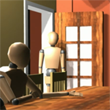
Glitch
3D Animation
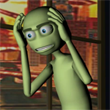
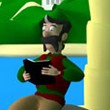
While this may not technically be a project regarding interface design or information architecture, it does illustrate spatial design and storytelling, which I think are quite related to interaction design. This fairly simple animation was modeled and animated within a month and tells a short story about robots. While I could have spent a long time on rendering a realistic environment, setting up a complex character rig or creating detailed models, I opted to focus on my story and the details of the animation.
A simple, semi-textured but well-thought-out building environment houses simple polygon, unrigged and faceless robots who effortlessly glide around on tracks. But what happens when something goes wrong?
Sep 2008
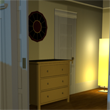
Apartment
3D Model
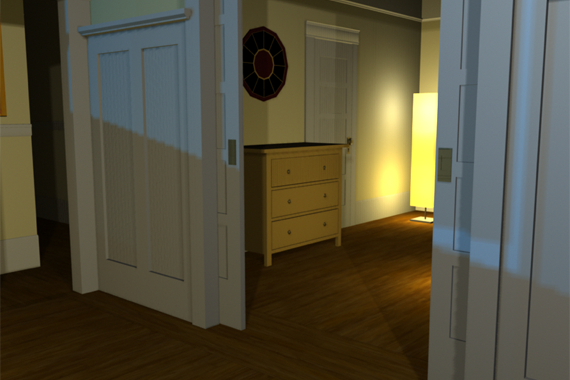
Given that I love architecture and the details of my apartment in San Francisco, I wanted to create a 3D model of the space so I could later play with various furniture layouts.
I tried to pay close attention to the details of the trim as well as the dim lighting at night, which gives the place an oh-so-lovely atmosphere.
This took about three hours to model and another two for touch-ups and lighting.
Feb - Mar 2008
Book Cover
Layout & Typography Design
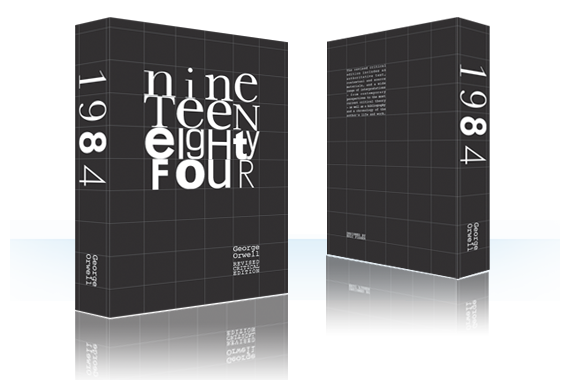
Book covers don't always convey the real essence of a story. Rather, they often serve as a marketing tool instead. I wanted to redesign the cover of one of my favorite stories, Orwell's 1984, by using visual metaphors as the design instead of concrete examples (such as photos). My goal: create a visually appealing design that also had depth of concept.
In thinking about how the design should be, I decided on a core value of "order from chaos." Among the book's themes was the idea of destroying individuality and making everyone equal. The resulting concept evinces the rigid structure of society imposed upon the unique lettering (each letter happens to be from a different revolutionary period - from the French in the 1400s up til present - slowly morphing from antique sans-serif to more modern serif style).
Letters are forced to fit within the same size squares so they appear equal and identical - but it is clear through the visual uneasiness that what may have been a perfect plan in society is not always the perfect solution.
Mar - Apr 2008
Poster Series
Layout & Typography Design
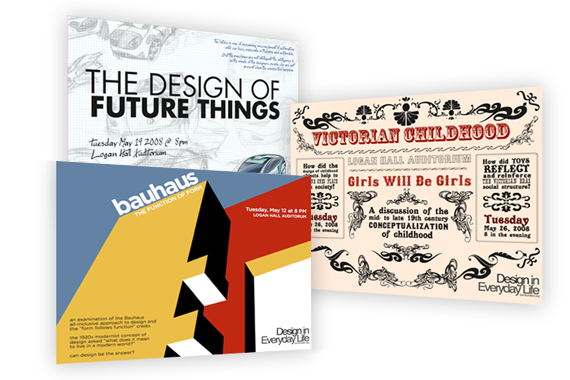
I created a series of posters for a lecture series entitled "Design in Everyday Life." Although the subject of each of the three lectures in the series were different, they all shared a common theme.
As such, I aimed for a design that maintained each session's individuality, captured the essence of its story and still contained shared elements with the other posters. Here you see posters for a talk on the Bauhaus movement, the Victorian era and the Design of Future Things. All posters have the lecture series logo in the lower right, which tie them together.
Mar 2008
Visual Typography
Layout & Typography Design
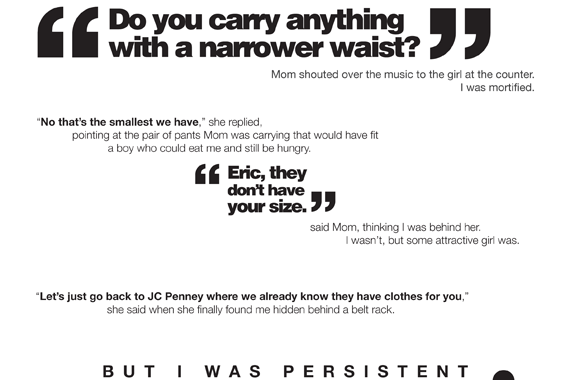
When I started writing a book about my stories from childhood - highlighting tough 'coming of age' situations but told from a fairly humorous and overly neurotic standpoint - I wanted to present the story visually, but without pictures.
I wrote about trying to fit in by buying the trendy clothing. By delving into the meaning of the story, its implications and the emotions surrounding it, I created visual typography that enhances the overall concept and emotion of the story.
Download Full PDF
Mar - Apr 2005
Piano & Concert Hall
3D Model
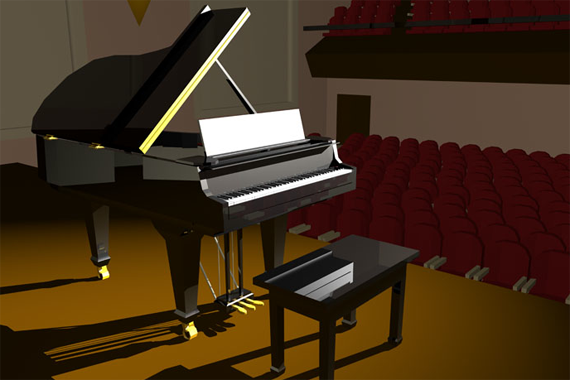
After playing performance piano for nearly two decades, I wanted to mimic one of many concert halls I'd played in. To capture the essence, I aimed to glorify the piano as the center of attention, leaving everything else in the dark and putting bright, harsh lights on the keyboard.
I specifically did not use textures because I wanted to convey a simple idea in a very basic form. The reflectivity of the blinn material on the piano body is enough.
Mar 2005
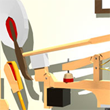
Piano Key
3D Model & Animation
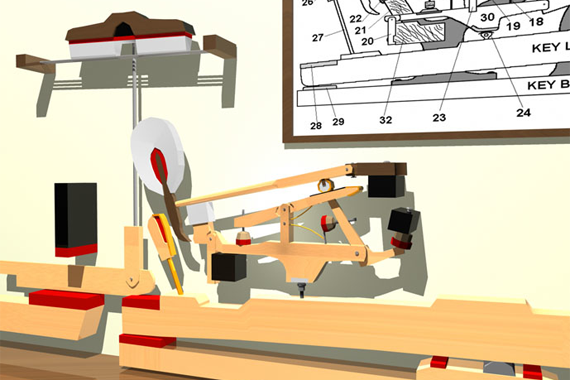
What better way to understand the piano key than to model all its components and animate a key stroke? I've been playing the piano for years, so it made sense to understand how it worked.
I spent a lot of time playing with actual keys and reading diagrams. When this model was finished, a simple duplication of it (88 times) produced a fully-animatable keyboard (See Piano model).
Feb - Mar 2007
Ollie
3D Animation
Since modeling a character and rigging it to move in all sorts of ways is exceedingly time-consuming, you can just download this free Ollie rig/model and spend your time animating it instead of creating it.
Given a 10-second verbal clip from the Matrix, I tried to make this character come to life in the lip-synching and subtle movements. I'll admit the background modeling and overall rendering is not perfected, but the focus was on the animation.
Feb - Mar 2005
Pirates
3D Models
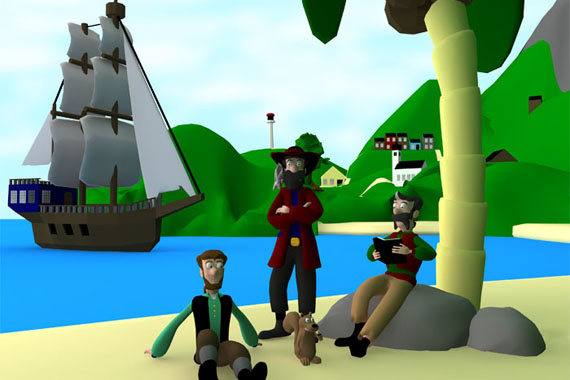
 Growing up as a cartoonist who loved creating imaginary worlds of characters, it was a necessity to render digital models of my pirate characters as soon as I learned how to do 3D modeling.
This was among my first modeling projects and was rendered in a cartoony fashion purposefully. Although I realized 3D modeling was to be more a hobby than a career for me, it's meaningful in that I was able to create something more tangible from an imaginary story and character set.
Feb - Apr 2007
"Habitat For a Habit"
Architecture
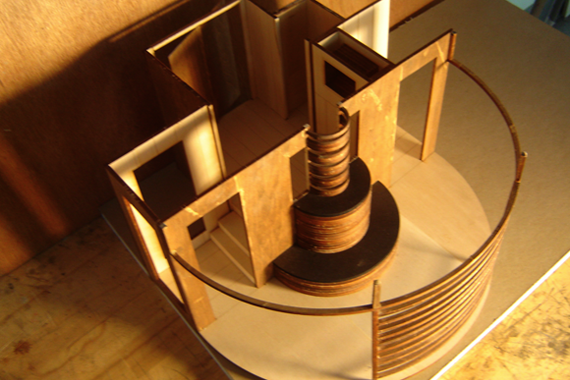
An exercise in designing a space around a concept, this structure is geared for my personal habit of eating cereal when I come home from being out all day. The space is designed to allow an inhabitant to enter, remove shoes and outerwear, proceed to prepare a bowl of cereal and then retreat to a semi-circular lounge area to gaze out on the world and reflect.
Project included actual wooden model, a 3D model, a model placing the structure in a real-world setting and a series of architectural plans and hand-drawn renderings.